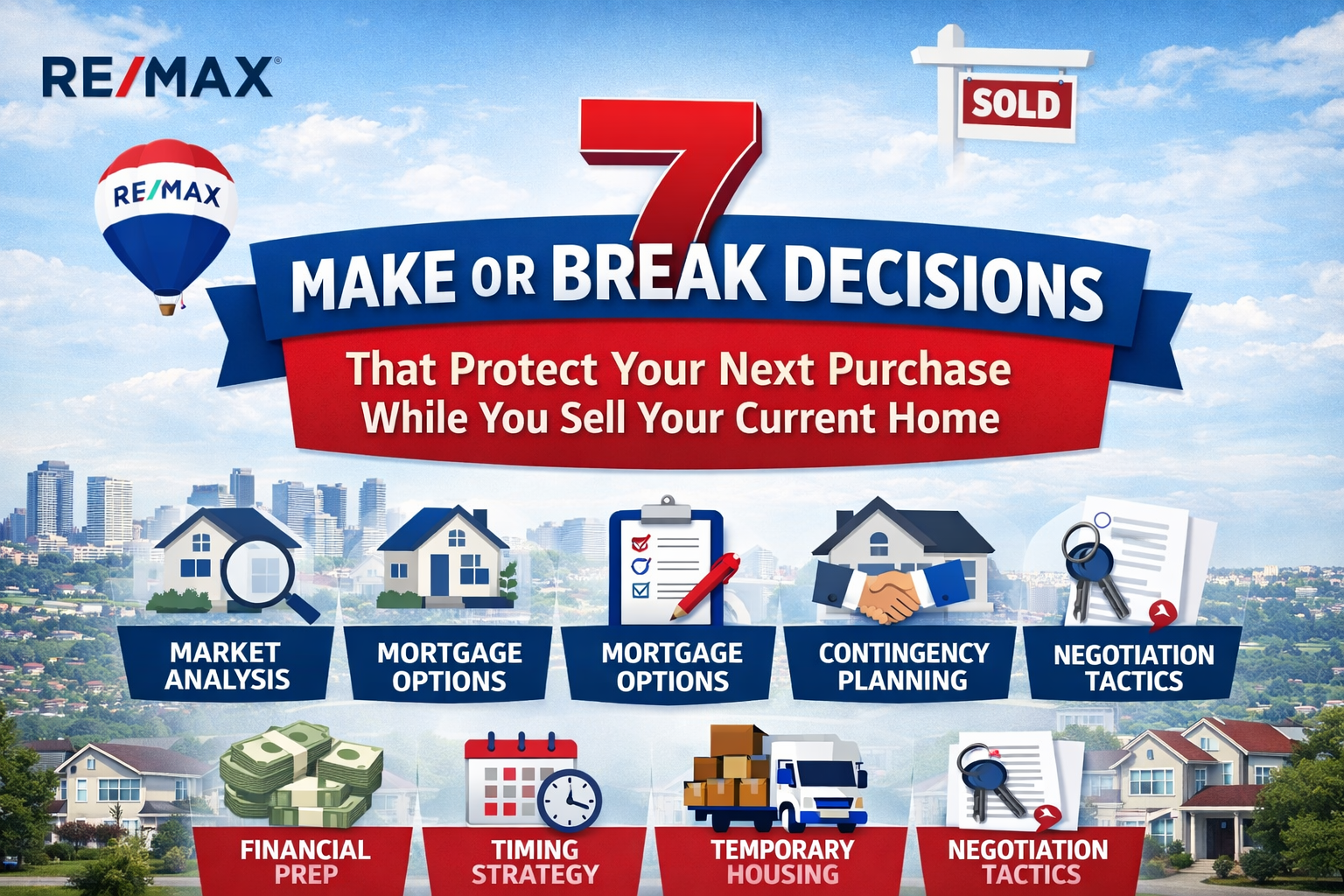
Most sellers who need to buy another home make at least three critical mistakes that cost them thousands of dollars or force them into temporary housing they never wanted. Right now, you're probably juggling offers on your current place while trying to secure your next home, wondering how to keep both deals moving without one destroying the other. This isn't another step-by-step guide that assumes you have months to plan every detail. Instead, we're focusing on seven specific decisions that will either give you control over this process or leave you scrambling to fix problems when deadlines hit. You'll learn the real tradeoffs behind rent-back agreements versus double moves, why the highest offer isn't always your best choice, and how to write contingency language that protects you without scaring away sellers. Each decision comes with actual client stories showing what happened when someone got it right or wrong, plus a mini checklist you can use before signing any offer or counteroffer. The current market reality is simple - competitive conditions punish uncertainty and tight timelines, which means the choices you make in the next few weeks will determine whether your move feels organized or chaotic. These seven decisions shape everything else that follows, from your financing options to your moving timeline to whether you'll actually get the house you want. Which of these decisions are you facing right now, and do you know the real consequences of each choice?
Decision 1: Pick your financing path before you shop seriously
Your financing choice sets everything else in motion — it determines whether sellers take your offer seriously, how fast you can close, and what happens if something goes wrong with either transaction.
Why financing comes first
This single decision shapes three critical factors that can make or break your simultaneous transactions. Your financing method directly impacts how competitive your offer appears to sellers, with some options allowing you to waive contingencies entirely while others signal potential delays. The timeline implications are equally important — bridge loans can close in days while traditional mortgages with sale contingencies often require 45-60 days of coordination between both properties. Most significantly, each financing path carries different risk profiles that affect not just your purchase power but your financial security throughout the entire process.
Three financing paths (plain-language comparison)
- Bridge loan — This option gives you the fastest path to a non-contingent offer, typically closing within 7-14 days and allowing you to compete like a cash buyer. Interest rates usually run between 10-12% annually, but the speed and certainty often justify the cost in competitive markets. Best for situations where you need to move quickly on your dream home and can handle higher short-term costs. Watch out for the exit strategy — you'll need your current home to sell within the loan term, usually 6-12 months.
- HELOC — Home equity lines of credit offer more flexibility with rates typically ranging from 7-9%, and you can draw funds as needed rather than taking a lump sum. However, your current home serves as collateral for this financing. Best for buyers who want lower costs and flexible access to funds over time. Watch out for variable rates that can increase your payments, and remember that "your home is on the line" if you encounter payment difficulties.
- Sale contingency — This approach requires your current home to sell before you can complete your purchase, offering the safest financial position with the lowest risk exposure. Best for conservative buyers who prioritize financial security over speed. Watch out for weakened negotiating power — sellers often prefer offers without contingencies, especially in competitive markets where multiple bids are common.
The key protection difference
The collateral structure creates a fundamental risk distinction between these options. HELOCs put your primary residence at foreclosure risk because "defaulting on a home equity loan or HELOC could eventually allow your lender to foreclose on your home." Bridge loans, conversely, are typically secured by the property you're purchasing, meaning your current home remains protected even if the new purchase encounters problems.
Quick client story
Sarah and Mike found their perfect home in March but hadn't decided on financing. While they spent two weeks comparing HELOC rates and bridge loan terms, another buyer with pre-approved bridge financing submitted a non-contingent offer and won the property. The sellers chose certainty over Sarah and Mike's higher offer that included a sale contingency, teaching them that financing decisions made too late can cost more than just interest rates.
Calculating your available equity provides the foundation for any financing decision, so start by getting a current market estimate of your home's value and subtract your remaining mortgage balance. Contact a lender this week to understand exactly what credit lines or bridge amounts you can access based on your specific financial situation. Establish a realistic timeline for selling your current property, factoring in market conditions and any needed repairs or staging work.
Decision 2: Decide whether you need a non-contingent offer or you can safely keep contingencies
A contingency acts as your escape hatch — it allows you to back out of a purchase without losing your earnest money if specific conditions aren't met. To sellers, however, contingencies represent potential delays and deal uncertainty that could leave their property tied up while you sort through complications. When you're managing both a sale and purchase simultaneously, each contingency clause becomes a calculated gamble between personal protection and competitive positioning.
Every additional layer of buyer protection typically weakens your offer's appeal, while stripping away contingencies strengthens your negotiating position but exposes you to greater financial risk.
A home-sale contingency requires your current property to close before you complete the new purchase, giving you the most comprehensive protection against carrying two mortgages. Clean language specifies exact deadlines — typically 30 to 45 days — and defines what constitutes an acceptable offer on your existing home, such as a purchase price within 5% of your listing price. The contingency should also outline what happens if your home doesn't sell within the specified window, whether you can extend the timeline or must withdraw from the purchase. According to a 2024 survey from the National Association of REALTORS, only 5% of home sale contracts were canceled, suggesting that well-structured contingencies often work as intended.
Mortgage contingencies should align precisely with your lender's actual timeline and approval status rather than generic 30-day windows that might not reflect your situation. If your lender needs 21 days for underwriting and you're already pre-approved, write the contingency for 25 days to provide a small buffer without unnecessary delays. Include specific loan terms — interest rate caps, loan-to-value ratios, and required appraisal values — so both parties understand exactly what must happen for the deal to proceed. "If your offer doesn't include a financing contingency and something goes wrong with your loan, the seller could back out of the deal."
Appraisal gap planning replaces the traditional approach of simply waiving appraisal protection entirely. Instead of removing this safeguard, specify how much additional cash you can contribute if the appraisal comes in low — perhaps $10,000 or $15,000 above the appraised value. This strategy shows sellers you're serious while maintaining some protection against overpaying. "Including this clause allows them to walk away from the contract without forfeiting their earnest money if the appraisal comes in lower than expected." You can also include a renegotiation clause that allows you to request a price reduction equal to the appraisal shortfall before deciding whether to proceed.
Research shows that 38% of bridge loan inquiries originate from competitive markets where sellers refuse contingency-heavy offers, highlighting how market conditions directly influence this decision. In areas with multiple offers and quick closings, contingencies can eliminate your chances entirely, regardless of your offer price.
One buyer learned this lesson when their home-sale contingency simply stated "subject to sale of current residence" without defining timelines or acceptable terms. When their listing received a lowball offer three weeks into the contingency period, the sellers of their target property demanded clarity on whether this constituted a valid sale. The vague language created a dispute that ultimately killed both deals, forcing the buyers to start over with more precise contingency wording.
Matching your contingency level to both your risk tolerance and current market heat determines your success rate. Conservative buyers in slower markets can maintain multiple contingencies, while aggressive buyers in competitive areas might need to waive most protections to secure their preferred property. Confirm specific contingency language and deadlines with both your agent and lender before submitting any offer to ensure the terms actually protect you without creating unnecessary complications.
Decision 3: Choose the offer that protects your timeline—not just the highest price
Smart sellers recognize that the most attractive dollar amount on paper doesn't always translate to the smoothest transaction when you're coordinating two property deals simultaneously. "The seller reviews all offers and selects the best deal, which might not necessarily be the one offering the highest price." The offer that guarantees execution on your required schedule often proves more valuable than one promising extra cash but carrying execution risks that could derail your entire moving plan.
Why "highest price" can be the risky choice when you're buying too
A single delay or failed transaction creates a cascade of problems that can cost far more than the extra money you might have gained from accepting the top bid. Missing your replacement home's closing date could mean losing that property entirely, forcing you into temporary housing arrangements that drain thousands from your budget, or weakening your negotiating position on future properties when sellers see you as a distressed buyer without a firm timeline.
The terms that matter most (when your next purchase depends on this sale)
Quick comparison example (how to decide between two "good" offers)
Offer A presents the highest dollar amount but includes a 45-day closing timeline that doesn't align with your new home's 30-day requirement, plus financing from an online lender with no local track record and an inspection period allowing the buyer to request repairs for any issues discovered. This combination introduces timeline risks that could force you into a bridge loan or temporary rental situation while creating multiple opportunities for the buyer to renegotiate or withdraw.
Offer B comes in $8,000 lower but offers a firm 28-day closing with a local credit union pre-approval, 20% down payment, $15,000 earnest money, and a streamlined inspection limited to major systems only. These terms provide timeline certainty and reduce renegotiation risks, protecting your ability to close on your replacement home as planned while minimizing the chance of deal complications.
Quick seller story (best terms saved the buy-side plan)
Jennifer received three offers on her Denver home, with the highest bidder offering $15,000 more but requiring a 60-day closing and including broad inspection language. She chose the second-highest offer instead, which guaranteed a 25-day closing and included a rent-back provision allowing her to stay five days after closing. This decision enabled her to close on her new home exactly on schedule, avoiding the $4,200 monthly bridge loan payment she would have needed with the longer timeline from the higher offer.
Ranking offers by execution probability and timeline fit before making acceptance decisions helps you avoid the trap of chasing extra dollars that could cost you far more in complications. Have your agent create a simple scoring system that weighs closing certainty, timeline alignment, and total transaction costs against the raw purchase price to identify which offer truly serves your dual-transaction goals.
Decision 4: Pick rent back or plan the double move with eyes wide open
Your financing path and accepted offer terms from the previous decisions create a narrow window where you must coordinate two closings without losing either property. This forces a fundamental choice between paying for the convenience of staying put temporarily versus accepting the financial and logistical burden of relocating twice within weeks. The pressure intensifies when you realize that one wrong move here can unravel months of careful planning.
A rent-back arrangement transforms you from homeowner to tenant in your own property after closing, giving you breathing room to complete your purchase without the chaos of simultaneous moves. "A rent-back agreement (also called a seller rent-back or post-settlement occupancy agreement) lets the seller remain in the home after closing and pay rent to the buyer." This setup creates a buffer period where your buyer takes legal ownership while you maintain physical possession, allowing you to close on your new home and coordinate a single, organized relocation.
Negotiating the rent-back terms requires attention to several critical components that protect both parties from disputes and unexpected costs. The daily rate typically reflects your buyer's carrying costs, "often calculated daily based on the buyer's monthly mortgage payment, PITI," which means you'll pay roughly what it costs them to own the property during your occupancy. The security deposit provides your buyer with protection against potential damages, while insurance responsibilities split between your renters coverage and their homeowner's policy. Utilities and maintenance obligations need clear assignment to prevent confusion about who handles repairs or service interruptions during the transition period. Most importantly, the hard end date establishes exactly when you must vacate, often including penalty clauses like double rent for overstaying.
Establishing crystal-clear end dates and written responsibilities prevents the most common rent-back disasters. "Lenders typically allow up to 60 days for owner-occupancy loans," which creates a natural boundary for most arrangements, but shorter periods reduce complications and costs for everyone involved. Vague language about move-out timing or undefined maintenance responsibilities create fertile ground for disputes that can damage relationships and delay your transition.
Moving twice means vacating your current home before your new property closes, requiring you to relocate your belongings to storage while you live in temporary accommodations until your purchase completes. This process involves coordinating three separate moves — out of your current home, into temporary housing, and finally into your new property — each with its own scheduling challenges and potential complications.
The hidden expenses of double moves extend far beyond basic moving truck rentals and can easily reach several thousand dollars. Storage unit fees for household goods typically run $200-400 monthly depending on size and location, while short-term housing options like extended-stay hotels or furnished rentals often cost $150-300 daily. School enrollment disruptions force children to miss classes or commute longer distances, while work productivity suffers from unstable living conditions and constant relocation stress. Professional movers charge separately for each phase, potentially tripling your transportation costs compared to a single direct move.
Bridge financing combined with short rent-back periods creates an ideal solution for buyers who can afford higher temporary interest costs in exchange for simplified logistics. Interest-only payment structures during the bridge period make even 10-12% rates manageable for 30-60 day windows, especially when you factor in the savings from avoiding storage, temporary housing, and multiple moving expenses. This combination allows you to maintain control over both transactions without the operational complexity of coordinating three separate relocations.
Planning rent-back agreements with specific end dates and penalty clauses protects both parties from the relationship damage that often occurs when arrangements drag on indefinitely. One family successfully used a 45-day rent-back with a firm deadline and $200 daily overstay penalty, allowing them to close on their new construction home exactly as planned. Another seller agreed to an open-ended arrangement "until the new house is ready" and ended up staying four months while their buyer grew increasingly frustrated with the undefined timeline, ultimately requiring legal intervention to resolve the occupancy dispute.
Weighing your tolerance for temporary higher costs against your need for logistical simplicity determines which path serves your situation best, with most sellers finding that rent-back arrangements justify their expense through reduced stress and smoother transitions.
Decision 5: Set a timeline that gives you breathing room and forces honest deadlines
Compressed schedules force sellers into accepting whatever comes first rather than evaluating what serves their dual-transaction needs best. When you're managing both a sale and purchase simultaneously, overly aggressive deadlines create a domino effect where one small delay triggers panic decisions that can cost thousands or force you into unwanted temporary housing arrangements.
The pressure to move quickly often blinds sellers to the mathematical reality that "closing delays occur in 22% of home closings," meaning your perfectly planned timeline has a one-in-five chance of falling apart without adequate buffers built into every milestone.
A practical timeline map (use this before you accept any offer)
- List date preparation — Your property should be market-ready with all repairs completed, professional photos taken, and pricing strategy confirmed before going live. This foundation prevents the common mistake of rushing to market with an incomplete presentation that extends your marketing window unnecessarily.
- Marketing window expectations — Plan for 14-21 days of active showing activity in balanced markets, though competitive areas may generate offers within the first weekend. This window allows enough exposure to attract multiple buyers while maintaining momentum toward your target review date.
- Offer review deadline — Set a firm date 10-14 days after listing when you'll evaluate all proposals, even if attractive offers arrive earlier. This approach prevents you from accepting the first reasonable offer without seeing what else the market might deliver.
- Contract-to-close target range — Aim for 30-35 days from acceptance to closing, providing enough time for standard mortgage processing while avoiding the extended timelines that create carrying-cost problems. This range accounts for normal inspection and appraisal schedules without unnecessary delays.
- Possession planning — Determine whether you need rent-back arrangements or can coordinate direct move-out timing with your purchase closing. Clear possession dates prevent last-minute scrambling for temporary housing or storage solutions.
- Backup-plan trigger points — Establish specific dates when you'll activate alternative strategies if milestones slip, such as week three without offers or day 25 of a contract without clear closing confirmation. These triggers force proactive decisions rather than reactive panic responses.
Where sellers get trapped (the 3 timeline mistakes)
The buffer rule (and how to negotiate it without sounding difficult)
The seven-day buffer rule provides a simple framework for protecting your timeline without appearing unreasonable to buyers or sellers. Add one week to every critical deadline — closing dates, possession schedules, and contingency periods — to account for the normal processing delays that occur in most transactions. When negotiating these buffers, frame them as coordination tools rather than signs of uncertainty. A sample script might be "We'd like to build in a few extra days for clean execution and document coordination, which benefits everyone involved in making sure this transaction closes smoothly." This language positions the buffer as professional planning rather than lack of confidence in the deal's viability.
One couple learned this lesson when they accepted a sale offer with a firm 28-day closing to align with their new construction completion date. When their buyer's mortgage processing hit normal underwriting delays, the three-day slip forced them to pay $2,400 in bridge loan interest and nearly cost them their new home when the builder threatened to release their lot to another buyer. The experience taught them that even small delays create expensive complications when timelines have no flexibility built in.
Adjusting your timeline expectations based on Greenville's seasonal patterns can prevent unrealistic scheduling that ignores local market realities. Spring months typically generate faster offer activity and shorter marketing windows, allowing for more aggressive timelines, while winter periods require extended marketing phases and longer buffer periods to account for reduced buyer activity and potential weather-related delays during the closing process.
Decision 6: Protect your monthly payment and cash reserves while you are carrying two homes
Double mortgage payments and the gnawing uncertainty of "what if my house doesn't sell quickly" represent the financial nightmare that keeps most sellers awake at night once they've committed to both transactions. This fear becomes reality when your carefully planned timeline stretches beyond expectations, leaving you trapped between properties with mounting costs that drain your resources faster than anticipated. The stakes couldn't be higher because this decision directly determines whether you maintain control over both deals or find yourself scrambling to salvage at least one successful transaction.
When your equity remains locked in your current property while you've committed to purchasing another, every additional week of overlap transforms from a minor inconvenience into a major financial strain. The core danger emerges when stretched monthly obligations force desperate decisions — accepting lowball offers, agreeing to unfavorable purchase terms, or worse, walking away from your dream home because you can no longer afford the carrying costs. This scenario plays out when sellers underestimate the true expense of maintaining two properties simultaneously and fail to establish firm boundaries around what they can realistically sustain.
Determining your maximum sustainable payment load requires honest math based on a realistic overlap period of 60 to 90 days rather than optimistic projections of quick sales. Calculate the combined monthly cost of both mortgage payments, insurance premiums, utility bills, and property taxes, then multiply by three months to understand your true exposure. This figure represents your worst-case financial commitment and should feel manageable rather than terrifying when you see it on paper. Most sellers discover that their comfort zone sits significantly lower than their technical ability to qualify for financing, which provides the first layer of protection against overextension.
Building adequate cash reserves means setting aside funds that cover more than just the obvious moving expenses — professional movers, storage units, utility deposits, and the inevitable surprise costs that surface during any relocation. Smart sellers establish a reserve fund equal to four months of combined property expenses plus $15,000 for relocation costs and unexpected repairs that buyers might demand during inspections. These reserves must remain untouchable throughout the entire process, serving as your safety net rather than a source of funds for other transaction costs or upgrade purchases for your new home.
Bridge loans create predictable monthly obligations through interest-only payments on a fixed amount, while HELOCs introduce payment variability based on how much credit you actually draw and when you access those funds. Bridge financing typically requires you to pay interest on the full loan amount from day one, creating consistent monthly expenses that you can budget around with certainty. HELOCs offer more flexibility but generate unpredictable payment amounts depending on your draw schedule and changing interest rates, making it harder to forecast your actual monthly obligations during the overlap period.
Bridge loan rates generally run higher than HELOC rates but often provide more payment stability through fixed-rate structures that won't change during your overlap window. HELOC rates can rise during the overlap window and change the monthly payment unexpectedly, particularly problematic when you're already managing the stress of coordinating two property transactions. Interest-only payments during the term characterize bridge loan structures, while HELOCs require "interest-only payments during the draw period" which can extend for years rather than months.
One seller successfully navigated a three-month overlap by pre-calculating their maximum comfortable payment at $4,800 monthly and securing bridge financing that kept them under this threshold, allowing them to wait for their ideal buyer rather than accepting the first reasonable offer. Another seller stretched to qualify for financing that required $6,200 monthly during overlap, then panicked when their home didn't sell within six weeks and accepted an offer $25,000 below asking price just to escape the mounting pressure of unsustainable carrying costs.
Running detailed payment scenarios with your lender this week establishes exactly what your monthly obligations will look like under different financing structures and confirms the minimum cash reserve threshold you absolutely cannot cross during the overlap period.
Decision 7: Lock in the paperwork details that prevent last minute surprises
Contract language transforms from boring boilerplate into expensive landmines when exhaustion clouds judgment and deadlines compress decision-making into frantic final hours. The very moment when precision matters most becomes the exact time when buyers, sellers, agents, and lenders rush through document reviews with diminished attention to detail. Vague wording that seemed acceptable during initial negotiations suddenly spawns costly disputes when interpretation becomes necessary for actual execution.
Ambiguous contract terms multiply their damage potential exponentially during dual transactions because every undefined element creates coordination risks between your sale and purchase that can derail both deals simultaneously.
Critical contract elements to verify before execution
Precise contract language protects working relationships between all parties by eliminating interpretation disputes that create adversarial situations during what should be collaborative problem-solving processes. When everyone understands exactly what happens in various scenarios, energy focuses on execution rather than arguing about unclear obligations that breed mistrust and communication breakdowns.
Final verification checklist before signing
- Possession date includes specific time and condition requirements
- All contingency deadlines align with your actual processing timeline
- Repair and appraisal language includes dollar limits and scope definitions
- Fee responsibilities are clearly assigned for various timing scenarios
- Backup offer procedures specify communication methods and response timeframes
Confirming these elements with both your agent and lender prevents the contract interpretation battles that consume time and energy when you should be coordinating smooth transitions between properties.
Final Thoughts
Control comes from making the seven decisions early, not from trying to move faster later when pressure builds. We've walked through the critical choices that separate smooth moves from chaotic ones - timing your sale with rent-back agreements versus double moves, weighing offer terms against pure price, crafting contingency language that protects without destroying your negotiating power, and selecting financing paths that work when your equity stays tied up.
Each decision connects to the next. Your financing choice affects your contingency timeline. Your contingency terms influence which offers you can accept. Your sale timing determines whether you need temporary housing or storage. The client stories we covered show exactly what happens when one choice goes sideways - missed replacement home windows, rushed moves, or mortgage commitments that stretch too thin.
This information saves you from expensive mistakes and stressful scrambles. You now understand the real tradeoffs behind each major choice. You can compare options faster and negotiate cleaner terms because you see the consequences before deadline pressure hits. Most importantly, you can avoid the costly errors that turn what should be an exciting move into a financial strain.
Use the decision checklist before accepting any offer or writing on your next home. Don't wing these choices when hundreds of thousands of dollars hang in the balance. Talk with an agent and lender together to map your financing options, timelines, and terms before deadlines arrive. Planning these seven decisions now gives you the confidence to handle whatever comes next.
Check out this article next